

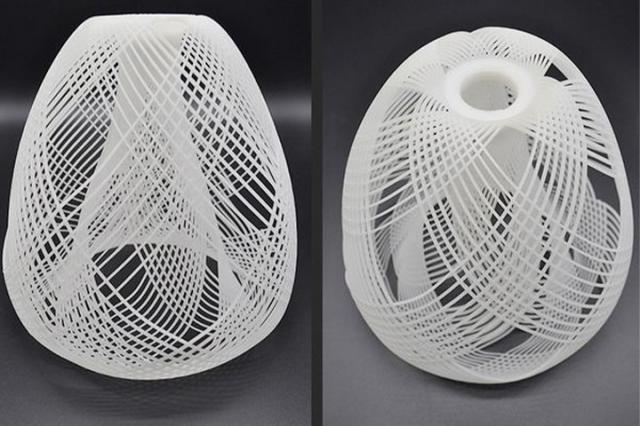
Accuracy and speed are no longer indulgences in today's fast-paced manufacturing world—they're necessities. Companies in every industry live in a state of perpetual urgency to decrease the time it takes to develop products without compromising on quality levels. That is where SLA rapid prototyping and SLA printing services are revolutionizing the process of product development.
Closing the Concept-Reality Gap
Functional prototypes in the past had long lead times and were cost-intensive, hence making rapid iteration challenging for businesses. Conventional approaches previously used to inhibit the innovation process and compel teams to lock in their designs before adequately testing them. With the use of SLA technology, this concept-reality gap is closed with great ease.
SLA, or stereolithography, has found broad acceptance as being among the most dependable additive manufacturing processes. SLA functions by curing liquid resin with a beam of light, enabling remarkably precise and detailed models to be made. It allows companies to alter digital design to a physical prototype in minutes instead of what previously took them.
Why SLA Rapid Prototyping Stands Out
High Detail: SLA printing can be used to create complex geometries and high-finish levels almost indistinguishable from production-ready parts.
Quick Delivery: Projects, which would have been drawn out, can now be delivered within days, and the teams can deliver on project deadlines.
Material choice: The available resins come in a variety of flexible and rigid grades, allowing production of prototypes that apply to a wide range of applications.
Cost-Reduced: Tooling-free prototyping is also much cheaper up front.
Such perks have made SLA rapid prototyping a common option in the automotive, aerospace, medical device, and consumer electronics sectors.
Transforming Industries with SLA Printing
Product designers and makers are no longer slaves to the old prototyping process. SLA printing allows even small companies and multinational corporations to print out several design concepts rapidly, so the final product is not just usable but also market-compliant.
Healthcare firms, for instance, employ SLA printing to create anatomy models for surgical planning or to make prototypes of new medical products before obtaining regulatory approval. Consumer electronics firms also use SLA prototypes for testing ergonomics and confirming design features prior to production in high volume. Being able to perfect a product based on field use feedback is turning out to be game-changing.
Enabling Innovation from Startups to Enterprises
Modern SLA printing services differ from the rest by their accessibility. Startups, whose prototype development was cost-prohibitive, can now compete with the big organizations due to the affordability of SLA services. Enterprises, meanwhile, enjoy scaling capacity to have multiple prototypes printed simultaneously.
The increased demand for SLA printing is an indication of a larger-scale trend in manufacturing. Prototyping is not an additional phase in the minds of businesses any longer; it is a required measure of reducing risk, providing quality, and competing in flooded markets.
The Future of SLA Printing and Prototyping
In the future, SLA use in manufacturing will only continue to grow. With materials becoming more advanced, stronger, more flexible, and biocompatible, SLA printing will no longer be limited to prototyping but to end-use production parts as well.
In addition, when companies embed digital workflows into additive production, SLA printing will keep providing time-to-market efficiencies. The technology will likely remain the basis of innovation for the coming decades.
Conclusion
The need for quicker, wiser product development is not diminishing. Those firms that embrace SLA rapid prototyping and SLA printing technologies are well-positioned to more effectively guide the way to innovation, lower costs, and bring products to market with confidence. New start-ups looking for their prototype or international business companies pilot-testing new designs, SLA is forging the future of manufacturing layer at a time.